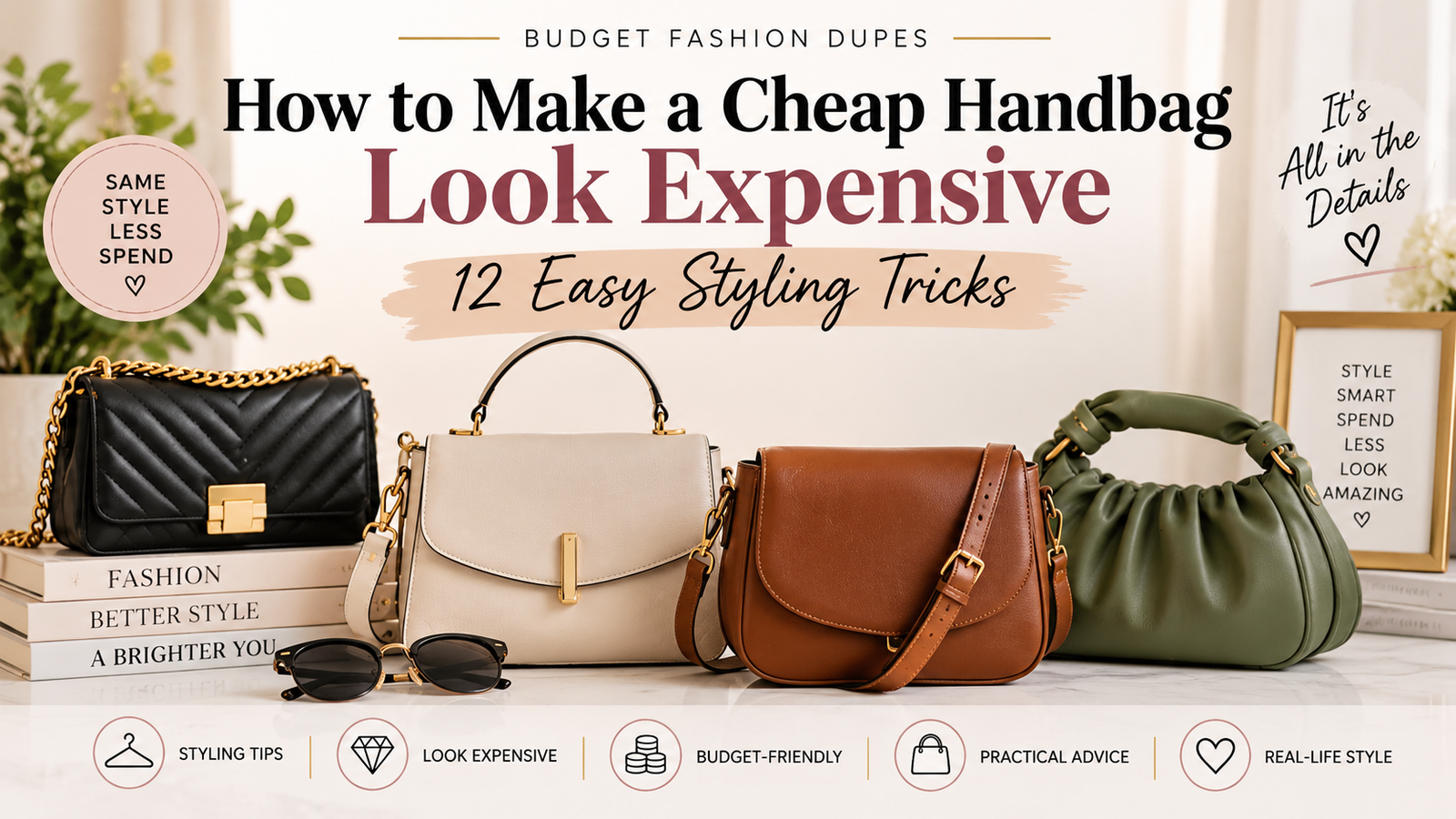
How to Make a Cheap Handbag Look Expensive: 12 Easy Styling Tricks
A handbag does not need a designer label to look put-together. In practice, the difference often comes down to a few visible details: whether the bag keeps its shape, how the hardware reads, whether the color works with your wardrobe, and how well the bag is cared for.
This guide looks at how to make a cheap handbag look expensive without pretending it is something it is not. Think of it as a styling-and-care checklist: small changes that can make an affordable bag feel sharper, cleaner, and easier to wear.
If you are still shopping for the right bag, start with our guides to affordable handbags that look expensive, affordable work bags that look expensive, and affordable crossbody bags that look expensive.
Disclosure: As an Amazon Associate I earn from qualifying purchases. Some links in this guide may be affiliate links, which means we may earn a commission at no extra cost to you.
Table of Contents
What Makes a Handbag Look Expensive?
Some bags look expensive at first glance because nothing about them is fighting for attention. The shape is clean, the proportions make sense, the hardware is restrained, and the color is easy to wear. None of those details has to be costly on its own.
Structure is another giveaway. A bag that holds its shape usually looks neater than one that sags, puckers, or bulges at the sides. Clean edges, a tidy closure, and hardware with a softer finish can also make an affordable bag look more considered.
The outfit matters too. The same handbag can feel casual with a busy look and much more sophisticated with simple, well-coordinated clothing. So the goal is not to “fake” luxury; it is to remove the little things that make a bag look untidy or overworked.
How to Make a Cheap Handbag Look Expensive: 12 Easy Ways
1. Choose a Simple, Structured Shape
Start with the shape. Structured totes, boxy crossbody bags, top-handle satchels, and simple shoulder bags tend to read cleaner than very slouchy styles covered in extra details.
If your bag is naturally soft, do not fight it by stuffing it full. Carrying a little less can help the silhouette stay closer to the way it was designed.
2. Stick to Classic Neutral Colors
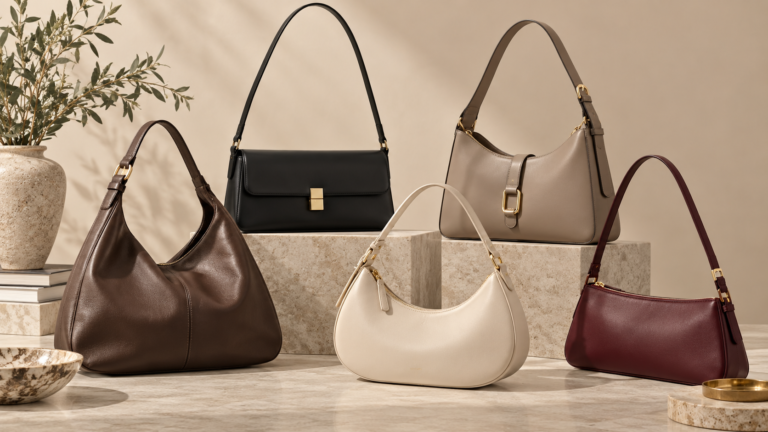
Neutrals do a lot of the work for you. Black, chocolate brown, taupe, cream, burgundy, and deep navy tend to sit easily beside denim, tailoring, knitwear, dresses, and coats without making the outfit feel busy.
That does not mean every bag has to be neutral. A richer color can work beautifully too; it just helps if the shade repeats something already present in your wardrobe instead of competing with everything around it.
3. Keep the Hardware Consistent
Hardware is one of those details people notice without always realizing it. Gold-tone, silver-tone, or gunmetal accents usually look better when the finish is consistent from the zipper pulls to the clasps and strap hardware.
Problems start when too many elements compete at once: mixed metals, a heavy chain, a large logo, extra studs, and decorative buckles. One strong detail can look stylish; five usually make the bag feel busier than it needs to.
4. Avoid Overloading the Bag
Overfilling is one of the quickest ways to make a bag look tired. Once the sides start bulging, the zipper line bends, or the handles pull outward, even a nice design loses some of its shape.
Be realistic about what you carry. If your everyday load includes a laptop, water bottle, lunch, and documents, a larger work tote will look better than a small handbag being pushed past its limits.
5. Keep the Exterior Clean
A clean bag almost always looks better than a neglected one. Dust, fingerprints, lint, and small marks show up quickly on black, cream, and smooth faux-leather finishes, so a quick wipe before you head out can make a real difference.
Use whatever care method the material actually calls for. Strong household cleaners can strip coatings, fade color, or leave the surface looking patchy.
6. Store the Bag So It Keeps Its Shape
Proper storage helps an affordable handbag look better for longer. When possible, keep it upright and avoid stacking heavy items on top of it.
You can lightly fill an empty bag with clean tissue paper or soft fabric to help maintain its structure. Do not overstuff it, because that can stretch the sides or distort the closure.
7. Coordinate the Bag With Your Shoes
Your bag and shoes do not need to be a perfect match. It is usually enough for them to feel related. A black handbag works naturally with black loafers, boots, or flats, while cognac pairs easily with warmer brown footwear.
The effect is subtle, but when the two pieces share a color family, finish, or level of formality, the outfit feels more pulled together.
8. Use a Clean, Minimal Outfit as the Background
Sometimes the easiest way to make the bag look better is to simplify everything around it. Straight-leg jeans with a crisp shirt, trousers with a fitted knit, or a monochrome dress can all give the handbag more room to stand out.
If the outfit already has bold prints, visible logos, statement jewelry, and several strong colors, the bag is competing with too much. A quieter backdrop usually makes the whole look feel more expensive.
9. Choose One Statement Detail, Not Five
One interesting detail is usually enough. A chain strap, woven finish, sculptural handle, or polished clasp can give a bag personality without making it feel overdone.
If the bag already has something distinctive going on, let that be the focus. Pair it with simpler jewelry, cleaner shoes, or a quieter outfit instead of adding another competing statement piece.
10. Pay Attention to the Strap
The strap can make or break the way a bag sits. If it is twisted, badly worn, or hanging at an awkward length, the whole bag can look a little off even when the design itself is nice.
Adjust a crossbody so it lands comfortably around the hip rather than bouncing too low. With a shoulder bag, check that it sits naturally under your arm instead of being pulled up too tightly.
11. Remove Unnecessary Packaging and Temporary Details
New bags often arrive with more packaging than you realize: protective film on the hardware, paper stuffed into the corners, plastic around a strap, or small ties holding pieces in place. Take a minute to remove all of it before the first wear.
Also look at any removable charms or add-ons with a fresh eye. If one makes the bag feel busier than the rest of your wardrobe, try the bag without it. Sometimes subtraction is the upgrade.
12. Style the Bag for the Occasion
The right bag for the setting almost always looks better than the fanciest bag in the wrong setting. A structured tote makes sense for work, while a compact shoulder bag or smaller crossbody can be easier for errands, weekends, and travel.
For dinner or a dressier event, a compact shoulder bag or simple clutch usually feels more in proportion than a large everyday tote. When the size and style suit what you are actually doing, the whole outfit feels more considered.
Quick 5-Minute Handbag Upgrade Checklist
- Remove receipts, wrappers, and anything you do not need.
- Wipe the exterior and hardware with a material-safe cloth.
- Straighten the strap and adjust it to a comfortable length.
- Check that the bag is not overfilled or bulging.
- Remove temporary packaging, protective film, or unnecessary charms.
- Pair the bag with a simpler outfit so the shape and color can stand out.
Best Handbag Colors for an Expensive Look
Color is subjective, but some shades are simply easier to style in a polished way.
Black is the safest all-rounder. It works with almost everything and is especially useful if your wardrobe leans tailored, minimal, or monochrome.
Chocolate brown feels a little softer and warmer. It looks especially good with cream, camel, denim, olive, and burgundy.
Taupe is useful when black feels too harsh. It works well with beige, white, gray, soft blue, and other muted tones.
Burgundy is a good choice if you want color without making the bag harder to wear. In fall and winter, it can do many of the same jobs as brown or black.
Cream can look fresh and elegant, but it is less forgiving. If you choose a light bag, keeping the corners, handles, and base clean matters more.
Common Styling Mistakes That Can Make a Bag Look Cheaper
The biggest mistake is usually overdoing something. An overstuffed bag loses its shape, and very shiny hardware can start to look fussy when it is mixed with several logos, chains, or decorative details.
Scale matters too. A huge tote can feel out of place at dinner, while a tiny fashion bag is frustrating for a commute that involves a laptop and charger. The bag looks better when it actually suits the job you are asking it to do.
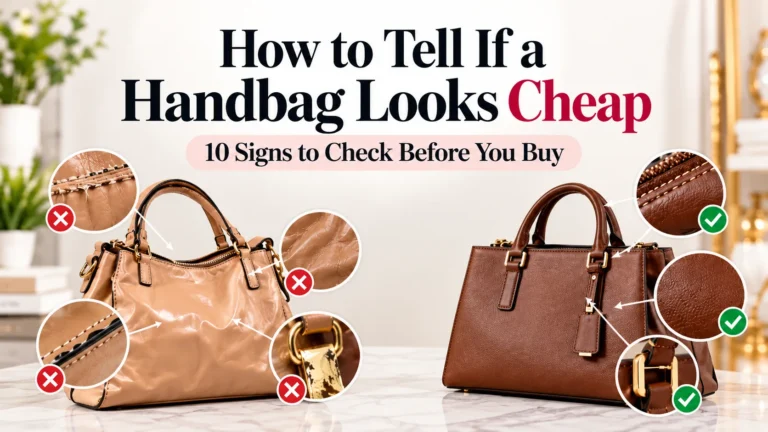
And no styling trick can fully hide wear. Peeling edges, stretched handles, loose threads, or visible stains will eventually become the first thing you notice. At that point, repairing or replacing the bag may make more sense than trying to style around the damage.
Frequently Asked Questions
Can a cheap handbag really look expensive?
It can. The price tag is only one part of what people notice. A clean shape, good proportions, restrained hardware, and a bag that is well cared for can make an affordable style look much sharper than its price suggests.
What handbag color looks the most expensive?
There is no single “luxury” color, but black, chocolate brown, taupe, burgundy, and cream are easy to style well. The best choice is usually the one that works naturally with the clothes you already wear.
Do structured bags look more expensive?
Often, yes, because structure gives the eye cleaner lines to follow. That said, a soft bag can still look elegant if the shape is intentional and the design is not overloaded with extra details.
How do I make faux leather look more expensive?
Look for a smooth, pebbled, or otherwise subtle finish rather than an extremely glossy one. Keep the surface clean, avoid overstuffing the bag, and let the rest of the outfit stay fairly simple.
Should my handbag match my shoes?
No. Matching them exactly can actually feel a little dated. It is usually enough for the bag and shoes to share a color family, undertone, or similar level of formality.
How can I keep an affordable handbag looking new?
Do not overload it, store it so the shape is supported, and keep it away from prolonged heat or moisture. Most importantly, follow the care instructions for the actual material instead of using a one-size-fits-all cleaner.
Final Thoughts
If you are learning how to make a cheap handbag look expensive, start with the details that cost nothing: shape, cleanliness, proportion and styling. You do not need to make an affordable handbag look like a designer bag. The better goal is simply to make it look intentional: the right size for the occasion, a shape that is not overloaded, hardware that is not competing for attention, and a finish that is kept in good condition.
If you want the quickest improvement, start small. Empty out what you do not need, wipe the bag down, adjust the strap, and wear it with an outfit that is a little cleaner and less busy. Those changes cost nothing and are often the ones you notice most.
And when you are buying rather than styling, versatility is worth more than novelty. A dependable tote, an easy crossbody, and a work bag you genuinely enjoy carrying will usually earn more wear than a closet full of impulse buys.